Arrowroot
The toxic underground bulb can be eaten after extensive preparation. It needs to be soaked in several changes of water to make it edible. They are fully developed from January to August. The plant can be found behind sandy beaches and monsoon forests of the northern coastline of Northern Territory and Queensland.
Australian Bugle
Fairly common along the east coast, the plant produces purple flowers from March to May. The leaves would be bruised and soaked in hot water to make an infusion to bathe boils and sores.
Bamboo
Endemic to tropical northern Australia, it is commonly found along river and creek banks growing to a height of 15 metres or more. These outcrops provide a home for flying foxes as well as reptiles.
Throughout south east Asia young bamboo shoots are eaten as a vegetable – either boiled or stir fried however Aboriginal people tended to use them to make spears and didgeridoos.
Around Adelaide residents are being urged to plant bamboo to supply the Adelaide Zoo‘s Pandas Wang Wang and Funi on loan from China.
Bulrush
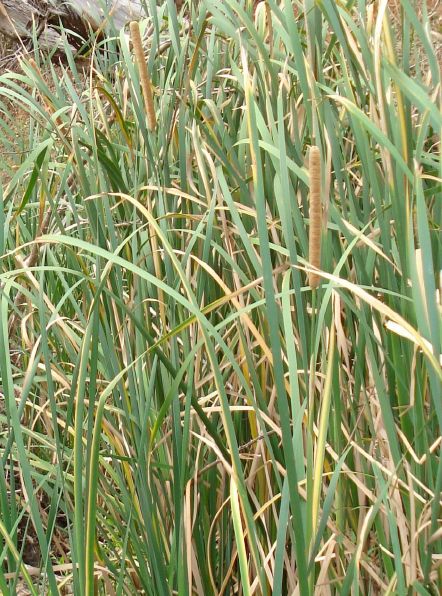
Can be found growing along the edges of lagoons and waterways in the northern half of Australia. From October to January new shoots emerge from the base. The soft white part of this shoot is edible. In April and May the shoots produce a yellow pollen which was shaken and collected to make flour.
The brown and white fluff from the flowering spike can be used to dress wounds and the watery sap has been used as protection against leeches.
Bush Carrot
Springs to life in the wet season along the northern coast near Darwin as well as Cape York and the Cairns-Townsville coastline. The flavour is considerably improved by roasting on hot coals.
Chaff-flower
A thin stemmed weed to one metre growing in sandy soil across northern Australia. The young leaves can be boiled and eaten as a vegetable.
Giant Speargrass
Occurs mainly along north western Australia along the Kimberley coast. When mature the spear-like canes reach 2 metres. The base of each grass stem can be chewed and sucked like sugar cane. It is not swallowed.
Pigface
Can be found in most parts of Australia. A ground running creeper with fleshy leaves and little purple flowers or purple fruit. Can be eaten raw or boiled and eaten as greens. You can apply the juice to sandfly bites or make a poultice of crushed leaves to apply to burns and scalds. The Ngaruk willum people of Port Phillip Bay Victoria used it as a balm to minimise pain.
Pigweed
Grows everywhere, a succulent ground creeper with small fruit or seeds. The seeds were ground into a flour to make a rough cake. Fleshy leaves and shoots eaten raw or cooked.
Saw-sedge
This grass like plant can be found along tracks and creeks in tropical rainforests of the east coast. The long blades are saw-edged and can do considerable damage if you ever get caught in one. They have bright red, black, brown or grey coloured seeds which can be pounded and ground to produce a rough kind of flour.
Saw Sedge was amongst the foods enjoyed by the Ngaruk willum people who inhabited the eastern side of Port Phillip Bay around Brighton and Mordialloc in Victoria. They also ate tubers of Water Ribbons, the fruits of Sticky Boobialla and the berries and leaves of Honey Pots.
Thistle
Thistles thrive in arid regions. The Emilia Sonchifolia can be boiled and eaten as greens or consumed raw and has a lettuce like taste. Thistle leaves were boiled in water and the liquid used to bathe patients with colds, flu and headache.
Spinifex
This harsh spiky grass is common throughout the drier regions growing in hummocks. At certain times of the year the plant produces a sticky sap which can be heated and used as a glue. It becomes very hard when cool. The young ground runners were pulverised to use as an antiseptic for cuts and burns. The grass was used for constructing shelters and windbreaks as well as a fire starter.

 Bush Tucker Recipes at the Aussie table